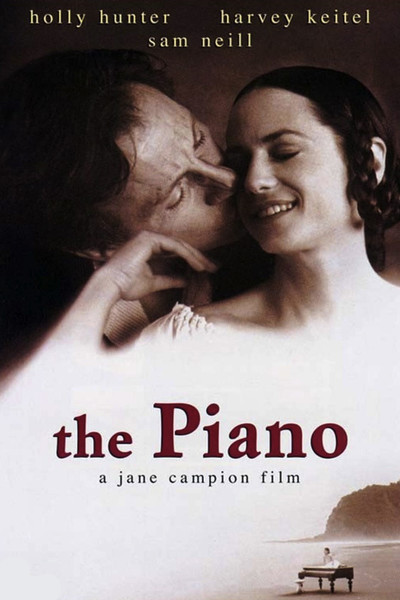
As a film concerning both feminist and colonial issues, the correlation between feminism and colonialism in The Piano (Jane Campion, 1993) can be explored according to its heroin’s anti-patriarchal performances in relation to colonialism. In this essay, it will be demonstrated that although the feminist heroin may be considered as complicit with imperialism in certain aspects, her anti-patriarchal behaviors function to protest against colonization in greater extent, which suggests the negative relationship between feminism and colonialism in The Piano. This essay will firstly analyze the heroin’s parallel condition of inferiority with the colonized Maori people in New Zealand according to their shared “invisibility”, experiences of being devalued and their intimate connections with the sensation of “touch”. Sharing similar conditions, this essay will simultaneously demonstrate the ways Ada speaks for the locals, who revolts against colonization through her anti-patriarchal behaviors of self-imposed muteness, self-mystification and prioritization of “touch”. Subsequently, certain performances of the female protagonist who is suspicious of discriminating the native will be discussed, which challenge the supportive relationship of feminism to anti-colonialism in the film. Elaborating the particularity of Ada’s position in the society and Ada’s strategic displacement of gaze, this essay will then argue for the intimate relationship between Ada’s feminist performance and her resistance against colonial oppression. Finally, discussing the connotations of the piano, which symbolizes both colonialism and feminism that suggest their alliance, this essay will end by analyzing Ada’s character development who gradually relinquishes discursive ideology as a colonizer, which justifies the opposite relationship between feminism and colonialism in the film.
To begin with, because Stuart as a white male is a representative of both patriarchal masculinity and Western colonizer, Ada’s protest against him can be seen as both anti-patriarchal and anti-colonial. Simultaneously, Ada is qualified to be a speaker for the repressed group who is similarly marginalized with Maori people by the dominant group of white men. To elaborate the shared marginalization, Ada’s condition as a woman resembles the Maori people’s situation, whose interests are both ignored by the dominant group. Precisely, Stuart as a patriarchal figure exchanges Ada as an object with her father and neglects her unwillingness by forcing her to teach piano lesson. As a white colonizer, Stuart also never directly communicate with the Maori, who only interacts with them through his translator Baines, which suggests Stuart’s inability to listen to the native people’s voices. Moreover, Ada as representative of women and the Maori as representative of the colonized population share “invisibility” in a wider historical context. Because the intellectual capable to determine the production of history record the “truth” in favor of their own political interest,[1] the colonizers’ persecutions of native people became erased in considerable extent. Resembling the elimination of the Maori’s existence in history, women have also been treated as insignificant and less important throughout history, and therefore Ada shares similar invisibility with the Maori. Being commonly exploited, Ada “speaks” for the Maori who rebels against Stuart through deliberately using her silence as a feminist strategy. To illustrate, it has been demonstrated by Helene Cixous that because women have been discursively defined by men as hysterically talkative, the females’ voluntary silence functions as an ultimate approach to protest against patriarchal gender stereotype.[2] Therefore, Ada’s self-imposed muteness is actively chosen as an aggressive approach to reject masculine stereotypical oppression. Opposing Stuart who also stereotypically ignores the voice of the native population, Ada’s rebellious protest hence indicates her resistance against him as a colonizer simultaneously.
Secondly, both the Maori and Ada are commonly devaluated and repressed by the dominant group. On the one hand, Edward Said has recognized that Orientalism functions as the Westerners’ cultural tool to justify imperialism through devaluating the locals by regarding the Orients as ignorant creatures needing the salvation of the civilized.[3] Based on the film’s representation of the Maori people who are “ignorant” and behave childishly, their inferiority in the eyes of Westerners is manifested. The lack of interpretation of the Maori’s language also suggests their inability towards effective communication, which represents the discursive impression of the colonizers imposed on the native to justify their “civilizing mission”. On the other hand, in terms of Laura Mulvey, men tend to escape castration anxiety caused by women through investigating them and demystifying their mystery, with “devaluation, punishment or saving of the guilty object”.[4] Consequently, to prevent being devaluated, Ada uses the music of piano to express herself with its particular nature that cannot be seized by language to deliberately mystify herself. Developing the particular approach of articulation that attached to her unknown femininity as a feminist strategy, Ada’s distancing from the outside world prevents her from being verbally investigated by patriarchy. Hence, although being mutilated by Stuart who tries to devaluate her as a guilty object, the inaccessibility of Ada’s self-expression for Stuart protects her from being demystified, which leads to Stuart’s eventual concession. Thus, as a “speaker” of the exploited group, Ada’s self-mystification not only protects her from Stuart, but also distances her from all the white colonizers who are not able to understand her music, which indicates her denial of both patriarchy and colonization.
Thirdly, because both women and people before being influenced by Western civilization have intimate connections with the sensation of touch, Ada actively touches Stuart to prioritize their subjectivities to subvert traditional power relationship. On the one side, because sexual pleasure comes more from touching than from looking for women, enforcement of the sensation of touch suggests feminist value.[5] Additionally, it has been revealed by Mulvey that because “scopophilia is essentially active”, the voyeuristic male gaze towards female body renders the female passivity under the controlling power of masculinity.[6] Therefore, since the notion of “look” is attached to patriarchal power, Ada initiatively touches Stuart’s naked body to resist against his patriarchal gaze upon her by prioritizing female subjectivity. On the other side, tactility as a type of spontaneous sensation corresponds to primitive instinct of the native people, which is essentially different from visual sense that contains meaning of power relations that constructed by Western civilization. As a representative of the Maori, Baines’ emphasis of touch during his interaction with Ada manifests the relationship between “touching” and primitive instinct. Sharing the similar connection with the sensation of touch with the locals, Ada’s active touch is not only anti-patriarchal, but also anti-colonial that prioritizes both feminine and primitive subjectivities, which suggests the negative relationship of feminism to colonialism. Consequently, Ada can be seen as a speaker for the Maori because of their shared “invisibility”, experience of being devaluated by the dominant group and intimate connections to “touch”. Since Stuart symbolizes both patriarchal and colonial oppressions, Ada’s feminist protests against him including self-imposed silence, mystification and active touches simultaneously suggest her rebel against colonialism.
However, denying the supportive relationship of feminism to anti-colonialism, it can be argued that Ada’s anti-patriarchal behaviors involve little anti-colonial insight, who is essentially imperialistic due to her identity as a white colonizer. Different from other Western female characters including aunt Morag and Nessie who frequently work with indigenous people within domestic sphere, Ada as a feminist character free from domestic housework not only rarely communicates with the patriarchal white people, but also has little contact with the native. Hence, despite of her protest against the dominant group, Ada is also suspicious of being racist who is unwilling to interact with the “inferior uncivilized savages” of the locals. According to Davinia Thornley, “Ada’s feminism does not just suppress the heterogeneity of the Maori; it negates the race entirely, and as such must be recognized as one form of imperialism”.[7] Additionally, because feminism cannot be achieved by a single woman without the universal alliance among women from different regions, Ada refusing to align with the indigenous female is not only complicit with imperialistic hierarchal ideology, but her “white only” feminist performance also undermines the future of feminism. Moreover, Ada’s feministic awareness of her individual ownership contradicts with postcolonial value of social equality. According to Simone de Beauvoir, women deprived of resources by patriarchy tend to objectify themselves, who grasp her immanence through owning herself as a fetishized object due to her lack of access of other objects[8]. Therefore, determinatively persevering her right of ownership of the piano, Ada protects her right of possession to maintain herself as a subject who resists to be objectified by emphasizing that “The piano is mine, it’s mine” when Stuart tries to convince her to teach Baines. However, Ada’s feminist maintenance of ownership is at the expense of equal treatment among people from different social groups. Regarding Baines as an ignorant oaf, Ada discriminatorily refuses to let him touch her piano, who acts as a typical European colonizer looking down upon the illiteracy of the indigenous people. Hence, the attachment of imperialistic ideology to feminist self-protection indicates the complicit relationship of feminism to colonialism in the film.
Nevertheless, avoiding to positively gaze the native people, the lack of contact with the locals can be seen as Ada’s strategic approach to refrain from being aligned with patriarchal colonialism according to her particular identity as a female coming from an imperial empire. Being restricted by rules of conducts under both colonial and patriarchal orders, not only equal communication between different races is prohibited, Ada as a female is also deprived of equal access as white men to interact with the native people.[9] Thus, it is not because of Ada’s own unwillingness to contact with the indigenous people, but the rigorous social orders inhibit her from aligning with people with colors to achieve feminism for all women. Moreover, firstly it has been demonstrated by E Ann Kaplan that travel essentially involves the looking relationship between traveler and people they encounter, which evokes a conscious attention to racial differences[10]. Secondly, based on Sigmund Freud’s theory that the sexual difference of female’s lack of phallus provokes men’s unconscious fear of the removal of his own genitalia, Mulvey theorizes that men attempt to escape the castration anxiety by actively gazing at women, which not only imposes passivity on her, but also objectifies her who then “becomes reassuring rather than dangerous”.[11] Therefore, the connection between looking relation and power relation between genders can be applied in racial terms. In other words, through looking at the native, the differences recognized by the colonizers potentially provoke their disagreement due to cultural discrepancy, who then use their gazes again to impose passivity upon the indigenous people as one of their methods to oppress them, which justifies the invaders’ own culture and guarantees their priority. Consequently, refraining from looking at the native, Ada prevents herself from developing discursive racial stereotypes who refuses to gaze the native as objects to secure her own sovereignty. Also, the displacement of Ada’s look from the native contrasts to her active gaze at Stuart, which functions to challenge white male hegemony by subverting the dominant male gaze to female gaze. Looking at Stuart’s naked body, Ada keeps fiercely gazing at him after being dismembered, whose firm gaze thwarts Stuart who finally relinquishes his possession of her as an object. Thus, Ada’s conscious displacement of gaze suggest both of her anti-patriarchal and anti-colonial values, who only investigates white colonizer without stereotypically looking at the indigenous people.
Opposing the positive connection between feminism and anti-colonialism in the film, the piano is essentially a symbol of both Ada herself and exploitative Western civilization. Because the juxtaposition of the piano and the natural landscape of New Zealand produces harsh contrast, it implies the conflict between the feminist carrying Western civilization and the local. On the one hand, since the piano is European bourgeoisie invention which stands for Western civilization, Ada’s intimate relationship with it implicates her inseparable correlation with exploitative Western ideology. On the other hand, the piano as the producer of her language is an extension of Ada that symbolizes herself, which simultaneously contains the feminist connotation of her self-imposed muteness and female ownership. Therefore, involving both colonial and feminist implications, the representation of the piano implies the associative relationship between feminism and colonialism in the film. Because neither can feminism be justified when containing imperialistic value that refuses to encompass a world of difference among women, nor can colonialism with its ideology of hierarchy embrace the equality of women worldwide, the two concepts have been defined mutually exclusive. Therefore, the duel identity of the piano involving incompatible values eventually leads to its destruction by being thrown into the sea, which indicate Campion’s recognition of the problematic combination. Moreover, according to Rueschmann, the ghostliness of the Gothic styled landscape of New Zealand in the film suggests the disoriented mental status of Ada due to her combination of both feminist and imperialist values that incompatible with each other.[12] Because the grotesque landscape also strongly contrasts with the conventional shape of the piano that symbolizes Ada, the contradictory relationship between different civilizations becomes manifested, while the intrusive advent of the piano can be seen as a metaphor of the European’s invasion to New Zealand. Thus, the dangerous atmosphere created by the peculiar design of decor suggests the hostile relationship between Ada with both feminist and imperialistic ideas and the primitive land of New Zealand, which indicates the alliance between feminism and colonialism in the film.
Finally, to argue for the supportive relationship between feminism and anti-colonial value, the juxtaposition of Ada and the localized figure Baines in the film leads to her character development who is becoming increasingly anti-colonial. Despite of Ada’s refusal of Baines at the beginning, she gradually develops to accept him and progressively combines her feminist perspective with his anti-colonial values to form an alliance to rebel against dominant group. Concretely, Baines with strong anti-colonial value symbolizes the Maori people, who shares various characteristics with the Maori whose illiteracy functions to rebel against the Law of Father as Ada’s muteness[13]. Therefore, being sexually awoken through the physical sensation of touch, which relates to both feminine and primitive instincts when Baines touches Ada’s body during the piano lesson, their shared instincts lead Ada to become increasingly closer to him psychologically. With her music becomes increasingly emotionally enriched, which contrasts to her impassionate attitude at the beginning of the piano lesson who only went through consecutive piano keys, Ada finally completely accepted Baines who initiatively made love to him. Since their sexual relationship signifies the alliance between female and the native, the connection between feminist performances of Ada and the anti-colonial representation of Baines in the film becomes explicitly conveyed. Additionally, not only is she becoming increasingly intimate with Baines, but also does Ada gradually abandons the imperial ideology herself. Because Ada’s costume of restrictive Victorian dress symbolizes the limitation imposed on her by Western civilization, taking off her clothes in front of Baines piece by piece who finally strips naked, the progressive development implicates Ada’s liberation from imperial ideology towards her integration with nature. With her hair finally put down after making love with Baines which was neatly fixed before that suggests the strict restriction of Western culture, Ada eventually throws the European symbol of her piano into the sea, which indicates her determination to abandon the imperial ideology that once restricted her. Consequently, the alliance between Ada and Baines leads to Ada’s progressive development who gradually becomes aware of and relinquishes her imperialistic ideologies. Through the integration of female and the native, the direct connection between Ada’s feminist performance and Baines’ anti-colonial behavior indicates the positive relationship of feminism to anti-colonialism in the film.
In conclusion, this essay has firstly analyzed the resemblance of female and colonized population according to their shared inferiority of being muted and devaluated by dominant groups and their common sensibility of the sensation of touch. As a speaker for the Maori people in the film, Ada rejects both male and white colonizers through her anti-patriarchal behaviors of self-imposed silence, self-mystification and emphasis of tactility, which functions to rebel against Stuart who is a representative of the dominant group. Subsequently, the lack of contact of Ada with the native and her discriminatory attitude towards illiteracy has been challenged as imperialistic, which suggests the connection between feminism with colonialism in the film. Demonstrating female’s particular position in patriarchal society during colonization, it can be argued that Ada resists to support colonialism through her special strategy of the displacement of look from the native to white male, whose gaze only interrogates hegemonic power. This essay then points out the piano’s duel connotations as both a symbol of rebellious femininity and Western civilization, which indicates the alliance of colonialism and feminism that questions the anti-colonial entity of feminist conducts in the film. Finally, the female protagonists’ character development has been analyzed, who gradually relinquishes her imperialistic ideology throughout the film with herself becomes increasingly localized, which justifies the negative relationship between feminism and colonialism in The Piano. Consequently, this essay has demonstrated that although Ada’s feminist performances in The Piano can be seen as complicit with imperialism in some aspects, she is portrayed as anti-colonial in a more significant extent, which indicates the negative relationship between feminism and colonialism in the film.
Bibliography
Bruzzi, Stella, Lynda Dyson, and Sue Gillett. “Tempestuous Petticoats: Costume And Desire In The Piano”. Screen 36, no. 3 (1995): 257-266.
De Beauvoir, Simone. The Second Sex, translated by Constance Borde and Sheila Malovany-Chevallier. London: Vintage, 2010.
Diane, Long Hoeveler. “Silence, Sex, and Feminism: An Examination of the Piano’s Unacknowledged Sources.” Literature/Film Quarterly 26, no. 2 (1998): 109-116.
El Aidi, Abdellatif, and Yahya Yechouti. “Antonio Gramsci’s Theory of Cultural Hegemony in Edward Said’s Orientalism.” International Multidisciplinary Research Journal 6, no. 5 (2017): 1-13.
Hendershot, Cyndy and Diane Long Hoeveler. “(Re)Visioning the Gothic: Jane Campion’s the Piano./ ‘Silence, Sex, and Feminism: An Examination of the Piano’s Unacknowledged Sources’.” Literature/Film Quarterly XXVI, no. 2 (1998): 97-116.
Mulvey, Laura. “Visual Pleasure and Narrative Cinema.” In Feminism and Film Theory, edited by Constance Penley, 57-68. Florence: Routledge, 1988.
Spivak, Gayatri Chakravorty. “Can the subaltern speak?.” In Can the subaltern speak? Reflections on the history of an idea, edited by Rosalind C Morris and Gayatri Chakravorty Spivak, 21-78. New York: Columbia University Press, 2010.
Thornley, Davinia. “Duel or Duet? Gendered Nationalism in” The
Piano.” Film Criticism 24, no. 3 (2000): 61-76.
 Film & Art