As a film student based in London, I am sharing some of my original artworks, film articles and short films in this website.
This is the first post on my new blog. I’m just getting this new blog going, so stay tuned for more. Subscribe below to get notified when I post new updates.
As a film concerning both feminist and colonial issues,
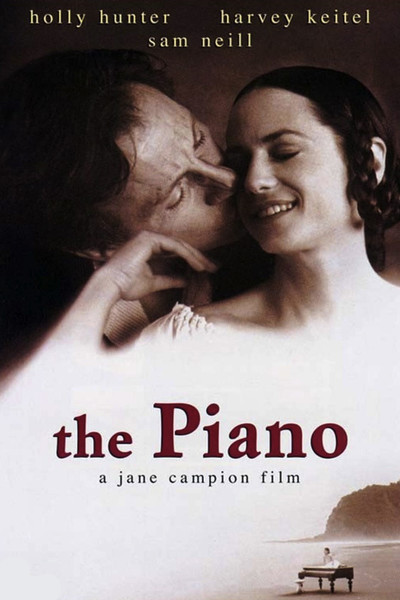
the correlation between feminism and colonialism in The Piano (Jane
Campion, 1993) can be explored according to its heroin’s anti-patriarchal performances
in relation to colonialism. In this essay, it will be demonstrated that
although the feminist heroin may be considered as complicit with imperialism in
certain aspects, her anti-patriarchal behaviors function to protest against
colonization in greater extent, which suggests the negative relationship
between feminism and colonialism in The
Piano. This essay will firstly analyze the heroin’s parallel condition of
inferiority with the colonized Maori people in New Zealand according to their
shared “invisibility”, experiences of being devalued and their intimate connections
with the sensation of “touch”. Sharing similar conditions, this essay will
simultaneously demonstrate the ways Ada speaks for the locals, who revolts
against colonization through her anti-patriarchal behaviors of self-imposed muteness,
self-mystification and prioritization of “touch”. Subsequently, certain performances
of the female protagonist who is suspicious of discriminating the native will
be discussed, which challenge the supportive relationship of feminism to
anti-colonialism in the film. Elaborating the particularity of Ada’s position
in the society and Ada’s strategic displacement of gaze, this essay will then
argue for the intimate relationship between Ada’s feminist performance and her
resistance against colonial oppression. Finally, discussing the connotations of
the piano, which symbolizes both colonialism and feminism that suggest their alliance,
this essay will end by analyzing Ada’s character development who gradually
relinquishes discursive ideology as a colonizer, which justifies the opposite
relationship between feminism and colonialism in the film.
To begin with, because Stuart as a white male is a
representative of both patriarchal masculinity and Western colonizer, Ada’s
protest against him can be seen as both anti-patriarchal and anti-colonial. Simultaneously,
Ada is qualified to be a speaker for the repressed group who is similarly
marginalized with Maori people by the dominant group of white men. To elaborate
the shared marginalization, Ada’s condition as a woman resembles the Maori
people’s situation, whose interests are both ignored by the dominant group. Precisely,
Stuart as a patriarchal figure exchanges Ada as an object with her father and
neglects her unwillingness by forcing her to teach piano lesson. As a white
colonizer, Stuart also never directly communicate with the Maori, who only interacts
with them through his translator Baines, which suggests Stuart’s inability to listen
to the native people’s voices. Moreover, Ada as representative of women and the
Maori as representative of the colonized population share “invisibility” in a
wider historical context. Because the intellectual capable to determine the
production of history record the “truth” in favor of their own political
interest,[1]
the colonizers’ persecutions of native people became erased in considerable
extent. Resembling the elimination of the Maori’s existence in history, women have
also been treated as insignificant and less important throughout history, and
therefore Ada shares similar invisibility with the Maori. Being commonly
exploited, Ada “speaks” for the Maori who rebels against Stuart through deliberately
using her silence as a feminist strategy. To illustrate, it has been
demonstrated by Helene Cixous that
because women have been discursively defined by
men as hysterically talkative, the females’ voluntary silence functions as an ultimate
approach to protest against patriarchal gender stereotype.[2]
Therefore, Ada’s self-imposed muteness is actively chosen as an aggressive
approach to reject masculine stereotypical oppression. Opposing Stuart who also
stereotypically ignores the voice of the native population, Ada’s rebellious
protest hence indicates her resistance against him as a colonizer simultaneously.
Secondly, both the Maori and Ada are commonly
devaluated and repressed by the dominant group. On the one hand, Edward Said
has recognized that Orientalism functions as the Westerners’ cultural tool to justify imperialism through
devaluating the locals by regarding the Orients as ignorant creatures needing
the salvation of the civilized.[3]
Based on the film’s representation of the Maori people who are “ignorant” and
behave childishly, their inferiority in the eyes of Westerners is manifested.
The lack of interpretation of the Maori’s language also suggests their
inability towards effective communication, which represents the discursive
impression of the colonizers imposed on the native to justify their “civilizing
mission”. On the other hand, in terms of Laura Mulvey, men tend to escape
castration anxiety caused by women through investigating them and demystifying their
mystery, with “devaluation, punishment or saving of the guilty object”.[4]
Consequently, to prevent being devaluated, Ada uses the music of piano to
express herself with its particular nature that cannot be seized by language to
deliberately mystify herself. Developing the particular approach of articulation
that attached to her unknown femininity as a feminist strategy, Ada’s
distancing from the outside world prevents her from being verbally investigated
by patriarchy. Hence, although being mutilated by Stuart who tries to devaluate
her as a guilty object, the inaccessibility of Ada’s self-expression for Stuart
protects her from being demystified, which leads to Stuart’s eventual concession.
Thus, as a “speaker” of the exploited group, Ada’s self-mystification not only
protects her from Stuart, but also distances her from all the white colonizers
who are not able to understand her music, which indicates her denial of both
patriarchy and colonization.
Thirdly, because both women and people before
being influenced by Western civilization have intimate connections with the
sensation of touch, Ada actively touches Stuart to prioritize their subjectivities
to subvert traditional power relationship. On the one side, because sexual
pleasure comes more from touching than from looking for women, enforcement of
the sensation of touch suggests feminist value.[5]
Additionally, it has been revealed by Mulvey that because “scopophilia is
essentially active”, the voyeuristic male gaze towards female body renders the
female passivity under the controlling power of masculinity.[6]
Therefore, since the notion of “look” is attached to patriarchal power, Ada initiatively
touches Stuart’s naked body to resist against his patriarchal gaze upon her by prioritizing
female subjectivity. On the other side, tactility as a type of spontaneous sensation
corresponds to primitive instinct of the native people, which is essentially
different from visual sense that contains meaning of power relations that constructed
by Western civilization. As a representative of the Maori, Baines’ emphasis of
touch during his interaction with Ada manifests the relationship between
“touching” and primitive instinct. Sharing the similar connection with the
sensation of touch with the locals, Ada’s active touch is not only
anti-patriarchal, but also anti-colonial that prioritizes both feminine and
primitive subjectivities, which suggests the negative relationship of feminism to
colonialism. Consequently, Ada can be seen as a speaker for the Maori because of
their shared “invisibility”, experience of being devaluated by the dominant
group and intimate connections to “touch”. Since Stuart symbolizes both
patriarchal and colonial oppressions, Ada’s feminist protests against him
including self-imposed silence, mystification and active touches simultaneously
suggest her rebel against colonialism.
However, denying the supportive relationship of
feminism to anti-colonialism, it can be argued that Ada’s anti-patriarchal
behaviors involve little anti-colonial insight, who is essentially
imperialistic due to her identity as a white colonizer. Different from other
Western female characters including aunt Morag and Nessie who frequently work
with indigenous people within domestic sphere, Ada as a feminist character free
from domestic housework not only rarely communicates with the patriarchal white
people, but also has little contact with the native. Hence, despite of her
protest against the dominant group, Ada is also suspicious of being racist who
is unwilling to interact with the “inferior uncivilized savages” of the locals.
According to Davinia Thornley, “Ada’s feminism does not just suppress the
heterogeneity of the Maori; it negates the race entirely, and as such must be
recognized as one form of imperialism”.[7]
Additionally, because feminism cannot be achieved by a single woman without the
universal alliance among women from different regions, Ada refusing to align
with the indigenous female is not only complicit with imperialistic hierarchal ideology,
but her “white only” feminist performance also undermines the future of
feminism. Moreover, Ada’s feministic awareness of her individual ownership
contradicts with postcolonial value of social equality. According to Simone de
Beauvoir, women deprived of resources by patriarchy tend to objectify
themselves, who grasp her immanence through owning herself as a fetishized
object due to her lack of access of other objects[8].
Therefore, determinatively persevering her right of ownership of the piano, Ada
protects her right of possession to maintain herself as a subject who resists
to be objectified by emphasizing that “The piano is mine, it’s mine” when
Stuart tries to convince her to teach Baines. However, Ada’s feminist
maintenance of ownership is at the expense of equal treatment among people from
different social groups. Regarding Baines as an ignorant oaf, Ada
discriminatorily refuses to let him touch her piano, who acts as a typical
European colonizer looking down upon the illiteracy of the indigenous people.
Hence, the attachment of imperialistic ideology to feminist self-protection
indicates the complicit relationship of feminism to colonialism in the film.
Nevertheless, avoiding to positively gaze the native
people, the lack of contact with the locals can be seen as Ada’s strategic approach
to refrain from being aligned with patriarchal colonialism according to her particular
identity as a female coming from an imperial empire. Being restricted by rules
of conducts under both colonial and patriarchal orders, not only equal
communication between different races is prohibited, Ada as a female is also
deprived of equal access as white men to interact with the native people.[9]
Thus, it is not because of Ada’s own unwillingness to contact with the
indigenous people, but the rigorous social orders inhibit her from aligning
with people with colors to achieve feminism for all women. Moreover, firstly it
has been demonstrated by E Ann Kaplan that travel essentially involves the looking
relationship between traveler and people they encounter, which evokes a
conscious attention to racial differences[10].
Secondly, based on Sigmund Freud’s theory that the sexual difference of
female’s lack of phallus provokes men’s unconscious fear of the removal of his
own genitalia, Mulvey theorizes that men attempt to escape the castration
anxiety by actively gazing at women, which not only imposes passivity on her,
but also objectifies her who then “becomes reassuring rather than dangerous”.[11]
Therefore, the connection between looking relation and power relation between
genders can be applied in racial terms. In other words, through looking at the
native, the differences recognized by the colonizers potentially provoke their
disagreement due to cultural discrepancy, who then use their gazes again to impose
passivity upon the indigenous people as one of their methods to oppress them,
which justifies the invaders’ own culture and guarantees their priority.
Consequently, refraining from looking at the native, Ada prevents herself from
developing discursive racial stereotypes who refuses to gaze the native as
objects to secure her own sovereignty. Also, the displacement of Ada’s look
from the native contrasts to her active gaze at Stuart, which functions to
challenge white male hegemony by subverting the dominant male gaze to female
gaze. Looking at Stuart’s naked body, Ada keeps fiercely gazing at him after
being dismembered, whose firm gaze thwarts Stuart who finally relinquishes his
possession of her as an object. Thus, Ada’s conscious displacement of gaze
suggest both of her anti-patriarchal and anti-colonial values, who only
investigates white colonizer without stereotypically looking at the indigenous
people.
Opposing the positive connection between feminism and anti-colonialism
in the film, the piano is essentially a symbol of both Ada herself and
exploitative Western civilization. Because the juxtaposition of the piano and
the natural landscape of New Zealand produces harsh contrast, it implies the
conflict between the feminist carrying Western civilization and the local. On
the one hand, since the piano is European bourgeoisie invention which stands
for Western civilization, Ada’s intimate relationship with it implicates her inseparable
correlation with exploitative Western ideology. On the other hand, the piano as
the producer of her language is an extension of Ada that symbolizes herself,
which simultaneously contains the feminist connotation of her self-imposed
muteness and female ownership. Therefore, involving both colonial and feminist
implications, the representation of the piano implies the associative
relationship between feminism and colonialism in the film. Because neither can
feminism be justified when containing imperialistic value that refuses to
encompass a world of difference among women, nor can colonialism with its
ideology of hierarchy embrace the equality of women worldwide, the two concepts
have been defined mutually exclusive. Therefore, the duel identity of the piano
involving incompatible values eventually leads to its destruction by being
thrown into the sea, which indicate Campion’s recognition of the problematic combination.
Moreover, according to Rueschmann,
the ghostliness of the Gothic styled landscape of New Zealand in the film suggests
the disoriented mental status of Ada due to her combination of both feminist
and imperialist values that incompatible with each other.[12]
Because the grotesque landscape also strongly contrasts with the conventional
shape of the piano that symbolizes Ada, the contradictory relationship between
different civilizations becomes manifested, while the intrusive advent of the
piano can be seen as a metaphor of the European’s invasion to New Zealand. Thus, the
dangerous atmosphere created by the peculiar design of decor suggests the
hostile relationship between Ada with both feminist and imperialistic ideas and
the primitive land of New Zealand, which indicates the alliance between feminism
and colonialism in the film.
Finally, to argue for the supportive relationship
between feminism and anti-colonial value, the juxtaposition of Ada and the
localized figure Baines in the film leads to her character development who is
becoming increasingly anti-colonial. Despite of Ada’s refusal of Baines at the
beginning, she gradually develops to accept him and progressively combines her
feminist perspective with his anti-colonial values to form an alliance to rebel
against dominant group. Concretely, Baines with strong anti-colonial value symbolizes
the Maori people, who shares various characteristics with the Maori whose illiteracy
functions to rebel against the Law of Father as Ada’s muteness[13].
Therefore, being sexually awoken through the physical sensation of touch, which
relates to both feminine and primitive instincts when Baines touches Ada’s body
during the piano lesson, their shared instincts lead Ada to become increasingly
closer to him psychologically. With her music becomes increasingly emotionally
enriched, which contrasts to her impassionate attitude at the beginning of the
piano lesson who only went through consecutive piano keys, Ada finally completely
accepted Baines who initiatively made love to him. Since their sexual
relationship signifies the alliance between female and the native, the
connection between feminist performances of Ada and the anti-colonial
representation of Baines in the film becomes explicitly conveyed. Additionally,
not only is she becoming increasingly intimate with Baines, but also does Ada gradually
abandons the imperial ideology herself. Because Ada’s costume of restrictive
Victorian dress symbolizes the limitation imposed on her by Western
civilization, taking off her clothes in front of Baines piece by piece who
finally strips naked, the progressive development implicates Ada’s liberation
from imperial ideology towards her integration with nature. With her hair
finally put down after making love with Baines which was neatly fixed before
that suggests the strict restriction of Western culture, Ada eventually throws
the European symbol of her piano into the sea, which indicates her
determination to abandon the imperial ideology that once restricted her. Consequently,
the alliance between Ada and Baines leads to Ada’s progressive development who
gradually becomes aware of and relinquishes her imperialistic ideologies.
Through the integration of female and the native, the direct connection between
Ada’s feminist performance and Baines’ anti-colonial behavior indicates the positive
relationship of feminism to anti-colonialism in the film.
In conclusion, this essay has firstly analyzed the
resemblance of female and colonized population according to their shared
inferiority of being muted and devaluated by dominant groups and their common
sensibility of the sensation of touch. As a speaker for the Maori people in the
film, Ada rejects both male and white colonizers through her anti-patriarchal
behaviors of self-imposed silence, self-mystification and emphasis of tactility,
which functions to rebel against Stuart who is a representative of the dominant
group. Subsequently, the lack of contact of Ada with the native and her
discriminatory attitude towards illiteracy has been challenged as
imperialistic, which suggests the connection between feminism with colonialism
in the film. Demonstrating female’s particular position in patriarchal society
during colonization, it can be argued that Ada resists to support colonialism
through her special strategy of the displacement of look from the native to
white male, whose gaze only interrogates hegemonic power. This essay then
points out the piano’s duel connotations as both a symbol of rebellious
femininity and Western civilization, which indicates the alliance of
colonialism and feminism that questions the anti-colonial entity of feminist
conducts in the film. Finally, the female protagonists’ character development has
been analyzed, who gradually relinquishes her imperialistic ideology throughout
the film with herself becomes increasingly localized, which justifies the negative
relationship between feminism and colonialism in The Piano. Consequently, this essay has demonstrated that although
Ada’s feminist performances in The Piano can
be seen as complicit with imperialism in some aspects, she is portrayed as
anti-colonial in a more significant extent, which indicates the negative
relationship between feminism and colonialism in the film.
Bibliography
Bruzzi, Stella, Lynda Dyson, and Sue Gillett.
“Tempestuous Petticoats: Costume And Desire In The Piano”. Screen 36, no.
3 (1995): 257-266.
De Beauvoir, Simone. The Second Sex, translated by Constance Borde and Sheila Malovany-Chevallier. London: Vintage,
2010.
Diane,
Long Hoeveler. “Silence, Sex, and Feminism: An Examination of the Piano’s
Unacknowledged Sources.” Literature/Film Quarterly 26, no. 2 (1998): 109-116.
El Aidi, Abdellatif, and Yahya Yechouti. “Antonio Gramsci’s Theory
of Cultural Hegemony in Edward Said’s Orientalism.” International Multidisciplinary Research Journal 6, no. 5 (2017):
1-13.
Hendershot,
Cyndy and Diane Long Hoeveler. “(Re)Visioning the Gothic: Jane Campion’s
the Piano./ ‘Silence, Sex, and Feminism: An Examination of the Piano’s
Unacknowledged Sources’.” Literature/Film Quarterly XXVI, no. 2 (1998): 97-116.
Mulvey, Laura. “Visual Pleasure
and Narrative Cinema.” In Feminism
and Film Theory, edited by Constance Penley, 57-68. Florence: Routledge,
1988.
Spivak, Gayatri Chakravorty. “Can the subaltern speak?.” In
Can the subaltern speak? Reflections on the history of an idea, edited by
Rosalind C Morris and Gayatri Chakravorty Spivak, 21-78. New York: Columbia
University Press, 2010.
Thornley, Davinia. “Duel or Duet? Gendered Nationalism in” The
Piano.” Film Criticism 24, no. 3 (2000): 61-76.
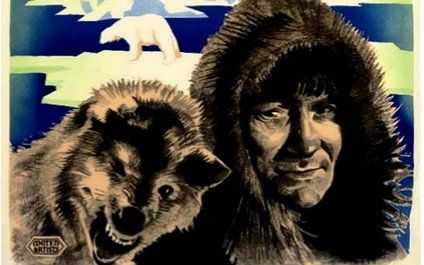
According to Fatimah Tobing Rony, the
documentary Nanook of the North (Robert J. Flaherty, 1922) is an example
of ethnographic taxidermy. Comparing the film subjects to taxidermies, Rony points
out that the subjects’ images are discursively reconstructed. Challenging the
film’s authenticity, Rony demonstrates the imbalanced power relationship
inscribed in the documentary. Based on Rony’s writing, I will argue that Nanook of the North is an ethnographic taxidermy for it
fulfills taxidermic impulse and distorts the subjects’ images, while the
subjects also possess certain active power, which challenges the film’s
taxidermic nature. In this essay, I will contend that the film’s subjects are
taxidermized by being portrayed as dead, which promotes the sense of
authenticity. I will then contend that the subjects’ images are abused by
Orientalist ideologies and reconstructed as prototypical taxidermies the taxidermies.
Dealing with the counter-point arguing for the authenticity of the documentary,
I will deny the notion of participant observation and demonstrate the ways the
film is fabricated. Seeing the taxidermic nature of Nanook of the North
as questionable, the Inuit people’s acknowledgement and participation of the filmmaking
will be examined. I will argue that they cannot merely be seen as taxidermies because
the subject possesses potential subjectivity in reference to the notion of oppositional
gaze.
In terms of
the taxidermic nature of Nanook of the North, the subjects are portrayed
as dead already. Like the lifeless taxidermies displayed in museum, the Eskimo are
represented as prehistorical creatures, which makes their images appear more
authentic. According to Rony, “In
order to make a visual representation of indigenous peoples, one must believe
that they are dying, as well as use artifice to make a picture which appears
more true, more pure.”[1]To
illustrate, André Bazin demonstrates an “obsession with realism” , while indexical
forms as taxidermy and photography renders them powerful force as evidence.[2] Additionally,
Mark Alvey highlights that the authenticity of taxidermy comes from people’s
acknowledgement of its reconstitution, and therefore the notion of pastness
becomes essential to indexical sign.[3] In the
documentary, intertitles establish the camera and introduce the audiences to
the world of the Eskimo. The filmmaker explains the Eskimo’s daily activities
on their behalf, for the dead can no longer speak for themselves. Suggesting
the impending death of the Inuit, the words such as “kill” and “hanger” are
repeated in intertitles throughout the film. Moreover, the maps showing the
geographic location of the native people’s inhabitant provides a sense of time
travelling, implicating that they may no longer exist. As taxidermies, the
Eskimos appear both real and dead, and thus their images become the most
authentic and respond to people’s realist obsessions.
Moreover, the Inuit is
represented as objects on display for their otherness based on the ideology of
Orientalism. According to Rony, Flaherty reconstructs the Eskimo as naïve
primitive lack of intelligence, while their images are consciously racialized based on popular imagination.[4] For example, Flaherty not only
emphasizes the Eskimo’s behaviors of eating raw meat, but also compares them to
animals by constantly intercutting between the Inuit and dogs. Having their
lives shown as constituted by bloody huntings, the Eskimo appears wildly
primitive and distinct from the civilized. Hence, the camera shares similarity with gun that they both
offer thrilling experience by capturing the wild. In terms of Finis Dunaway,
people temporally eschew from modernity and have their forbidden passion for
wildness fulfilled through seeing the primitive.[5] Additionally,
portraying the Eskimo in simple happiness, Flaherty’s subjects also appear lack
of sophistication. It seems the primitive is only occupied by dietary concern,
who remain a primal state without psychological requirement. Resembling the
stuffed taxidermies, the Eskimo is portrayed only in surface level, whose inner
world remain neglected. Not
only being hunted by orientalist gaze, the Inuit are simultaneously captured by
voyeuristic gaze. Revealing their
half-naked bodies, the Inuit appears the most primitive without the awareness
of shame. Highlighting their sexually connotative acts of “lick” and “touch”,
Flaherty represents erotic images of the native that satisfy the audiences’
voyeuristic desire. Hence, as an example of ethnographic taxidermy, Nanook
of the North offers an ideal prototype of the Inuit that conforms to
orientalist gazes and the audiences’ expectations.
Nevertheless,
Rony points out that the documentary’s authenticity has also been defended. It
is commented by Siegfried Kracauer that Flaherty’s “slight narrative”
resuscitates the indigenous people’s pure modes of existence, simply capturing
their lives as authentic primitive.[6] Precisely,
Flaherty’s long takes, deep focuses and self-effacing camera movements
contribute to a realistic representation. Thus, the natural cinematography
suggests participant observation and the audiences seemingly acquire perceptual
freedom.[7] However,
I would argue that it can merely be seen as an observation, while potential
impositions of western values devalue the subjects as idealized taxidermies in
the film. To illustrate, Rony demonstrates that the notion of participant
observation suggests an encounter, which acknowledges the subject’s own
perspectives. Instead, the natives are only represented from the observer’s
vision, whose images are distorted by stereotypes. Furthermore, Rony argues
that the indigenous are attached with Western values. For instance, the Eskimo seems
living harmoniously in an idealized peace that free from war; In the hunting
sequences, the native appears considerably preserved and brave, resembling the
superhuman with unlimited strength. Additionally, the mother (Nyla) always
devotes to her child (Allegoo) and the father appears independent. Embodying the
idea of proper gender role, the Eskimo is represented in a traditional family
corresponding to western value. Thus, it is highly contestable whether the
Inuit see themselves in the same way. According to Rony, the Eskimo is
portrayed as the “primitive protestant” with protestant value, which functions
to comfort white people in terms of the Nordic’s fear of racial annihilation.[8] Incorporating
the cherished traits of peacefulness, courage and nuclear family, Flaherty makes
the Eskimo’s images acceptable to Western audiences. Therefore, the documentary
represents the indigenous in the ways the viewers expect to see, crafting them
as ideal taxidermies that attractive and satisfactory.
Additionally,
the fictionality of the film is revealed according to the staged poses, the inaccurate
depictions and the removal of history. In the trading sequence, the intertitle
suggests that Nyla is showing her baby off to the trader, while she is actually
facing the cameraman. As a staged pose, the Inuit baby is deliberately
represented in to the audiences in a fabricated composition, which manifests
the fictionality of narrative. Moreover, it is manifested that the Inuit people
find the depictions of their ancestors in the documentary inaccurate. According
to Jo-Anne Birnie Danzker, “Allakariallak’s clothing was not indigenous to the
region; that the contrived sequences were highly amusing to the Inuit; that the
seal hunt was contrived.”[9] Moreover,
Rony contends that Flaherty removed the part of history regarding to the
connection between the Inuit and the white people. Based on historical fact, the
Inuit not only knew gramophones, but also adopted Western tools and clothes.[10] Selectively,
Flaherty represents the indigenous as archetypal primitive, who are raw-meat
eaters using only primal hunting tools and wearing animal furs. Consequently, the
fictional production process of the film is suggestive of its taxidermic nature,
while both the taxidermy and the documentary are creations of illusion of
reality.
However,
the film’s taxidermic quality is questionable due to the subjects’ awareness of
being filmed. Participating in the filmmaking, the subjects may act out their
real self-conception. Acknowledged by Rony, the Inuit collaborated to make the
film, who act, repaired camera and washed exposed film, etc.[11] It appears to me a feeble argument that Rony denies the
film’s collaborative nature due to the lack of existing Inuit accounts of the
process. Although the extent of collaboration cannot be confirmed, I would
argue that the Eskimo undoubtedly collaborated in performing themselves. According
to Thomas Waugh, the people playing themselves would be the most expressive, who
would act in specific ways based on their real characteristics.[12] Thus, although
the subjects were told to act, it is possible that they naturally performed
themselves out of authentic intuition. William Rothman argues that it is undoubtful
that Allakariallak understands the film “is made to be view, that the camera
filming him not only stands in for the visible filmmaker who is really in his
presence, but also for viewers who are absent, invisible.”[13] In the
igloo sequence, Allakariallak waves and grins at camera, who is possibly
showing genuine happiness in his own approach. Therefore, unlike the dead
taxidermies completely deprived of autonomy, the Inuit is aware of the camera
and consent to perform without being forced to.
Noticeably, Nanook
also stares at the camera, which suggests the notion of oppositional gaze. In
terms of Paula Amas, “when people look back at or toward the
camera—that purportedly has the effect of unbalancing cinema’s dominant gaze.”[14] Challenging the Orientalist gaze of the audiences,
Allakariallak looks back at the camera as a refusal and a mock. Instead of
performing himself as a simple happy man in accordance to the audiences’
expectation, it is manifested that Allakariallak merely found it funny being
shot by a camera.[15] Irrespective
of the Western audiences’ perceptions, Rony acknowledges that Allakariallak may
be seen as laughing at the camera from the Inuit people’s perspectives.[16] Unconcerned
by the onslaught of modernity, Allakariallak mocks the over-civilized at their
nervousness by laughing at their camera. Moreover, in the walrus hunt sequence,
Allakariallak’s direct gaze appears threatening and fierce, who is no longer
amicable but views the camera as an intruder. According to Rothman, “he is not
denying his relationship to the camera, but he is declaring that this
relationship has a limit, that this limit must be respected.”[17] The
oppositional gaze towards camera indicates the subject’s active power, while
the filmmaker challenged by the gaze subsequently cuts to a view of the sea,
respecting the subject’s refusal of being recorded. Consequently, the
oppositional gaze further demonstrates the subject’s subjectivity in the
documentary. Not merely being passively shot, the subject can challenge the
filmmaker and orientate the way he becomes represented.
Conclusively, Nanook of the North is an example of ethnographic taxidermy in terms of its lack
of authenticity and its ideological functions. Discursively portraying the
subjects as dead, the documentary fulfills the audiences’ realist obsessions; Reconstructing
the Inuit’s images in terms of orientalist stereotypes, Flaherty represents the
subjects as prototypical taxidermies of the uncivilized primitive; Conforming
to the audiences’ expectations, the idealized images of the native appear
reassuring and satisfactory; Based on the staged poses, the inaccurate
depictions and the deliberate removal of history, the production process also suggests
the film’s artificiality. Acknowledging the subjects’ participation of the
filmmaking, the taxidermic nature of the film is also contestable. In terms of the
Inuit’s voluntary self-performance and the notion of oppositional gaze, it is
possible that the subjects possess active power. Although the subjectivity of
the subject can hardly be confirmed due to the lack of evidence, the availability
of their authentic willfulness should be taken into consideration.
Consequently, although the subjects are taxidermized in multiple aspects and
the production process is highly fictional, it is reductive to consider the
subjects as merely taxidermies in Nanook of the North.
Bibliography
Alvey, Mark. “The Cinema as Taxidermy: Carl Akeley and
the Preservative Obsession.” Framework 48, no. 1 (2007):23–45.
Amad, Paula. “Visual
Riposte: Looking Back at the Return of the Gaze as Postcolonial Theory’s Gift to Film Studies.” Cinema
Journal 52, no. 3 (2013): 49-74
Bazin, André, and Hugh Gray. “The Ontology of the
Photographic Image.” Film Quarterly 13, no. 4 (1960): 4-9.
Dunaway, Finis. “Hunting with the Camera: Nature
Photography, Manliness, and Modern Memory, 1890-1930.” Journal of American
Studies34, no. 2 (2000): 207-230.
Geiger, Jeffrey. “Fiction, Truth, and the Documentary Contract.” In Film analysis: A Norton Reader,
edited by Jeffrey Geiger and R. L. Rutsky, 94-114. New York: W. W. Norton & Company, 2013.
Rony, Fatimah Tobing. “Taxidermy and Romantic Ethnography:
Robert Flaherty’s Nanook of the North.” In The Third Eye: Race, Cinema, and
Ethnographic Spectacle, 91-126.Durham, N.C. and London: Duke University Press, 1996.
Rothman, William. “Nanook of the North.” In Documentary Film
Classics, 1-20. Cambridge: Cambridge University Press, 1997.
Waugh, Thomas. “Acting to Play Oneself: Acting
in Documentary.” In The Right to Play Oneself: Looking Back on Documentary
Film, 71-92. Minneapolis and Minn: University of Minnesota, 2011.
An environmental documentary I made in collaboration with my friends, in response to the incresingly deteriorating environment and the extinction rebellions: Our Planet
In
terms of Chaplin’s slapstick performance, the uncontrollability of his body
reflects the problem of mental dislocation in contemporary society. According
to the action of falling adopted throughout his comedies, Chaplin represents
himself as a hysterical figure who is incapable to coordinate his physical
body. It is demonstrated by Susan Mccabe that Chaplin’s hysterical motion
reflects a mental detachment from bodily organ that permeates every
“non-hysterical” subject in contemporary society.[1] To illustrate, people frequently
experience involuntary loss of attention due to the traumatic onslaught of
shocking experience brought by modernization.[2] As a symptom of the
rapid social transformations in modern society, hysteria has become a universal
experience. Therefore, Chaplin embodies the universally experienced absence of
consciousness by reinforcing the action of falling, who reflects the modern disease
of hysteria through his comedic body. For example, Chaplin repeatedly falls on
a road at the beginning of The Tramp
(Charlie Chaplin, 1916). Being corporally unable to deal with the rapidly
passing motor vehicles, the tramp seems incapable to escape the road, who is
coerced to regain his feet and keep being inflicted. Juxtaposing the symbol of
modern technology with the action symbolizing inefficiency, Chaplin exposes the
tramp’s mental incapability to grasp modernity. Metaphorically, the tramp’s
physical vulnerability reflects people’s experiences of being incapable in the
reality under unceasing social transformations. Thus, Chaplin represents a
circular failure through bodily performance to reflect the problem of people’s
inflicted psyche in the modern society.
Not
only does he fail to balance physical body, Chaplin also appears unable to
control his motor impulse. Unable to repress kinesthetic impulse, Chaplin deliberately
acts like a child to undermine the concept of proper behavior in modern values.
In terms of Guillemette Bolens,
Chaplin performs “irresistible kinesthetic” as a decentered subject, who
expresses motor urges whenever experiencing kinesthetic sensations.[3] Because people’s spontaneous reactivity is encouraged to be repressed
in modern society, Chaplin represents the uncontrollability of motor impulse to
embrace innate human nature and subverts constructed social norms. For
instance, the tramp instinctually laughs when he learns to perform clown show
in The Circus (Charlie Chaplin,
1928). Knowing the inappropriateness of laughing at this situation, the tramp
still cannot help immediately bursting into laughter when experiencing funny
events. Lifting his legs and shaking his body, Chaplin laughs in an
unconstrained manner irrespective of social norms. Only when being stared by his
boss does he stop, the tramp keeps failing to control his motor impulse and
shortly laughs again. Additionally, not only unable to control his cheerfulness,
Chaplin also impulsively expresses anger through direct bodily behavior. In the
boat scene of The Immigrant (Charlie
Chaplin, 1917), the tramp irritated by an officer retaliates by kicking his
arse. It is explained by Dan Kamin that the arse is culturally considered the
most undignified part of human being. Therefore, the action of arse-kicking is
more atavistic than other behaviors normally used to express anger.[4] Without considering the socially constructed concept of dignity,
Chaplin performs a spontaneous stimulus response driven by human’s primal
impulse. Prioritizing spontaneous bodily reactions over the demand of society, Chaplin
performs a “natural man”, per Tom Gunning, to oppose the bourgeois value of
enclosed body.[5] Consequently, Chaplin utilizes bodily performance to represent the
uncontrollability of desire and suggest the universal propensity of losing
control among human being, who criticizes modern values through subverting social
norms.
Based on the critical meanings attached with bodily
performance, Chaplin utilizes multiple elements in mise-en-scne to vivify his
performance and further challenge modern society. According to the specific
makeups adopted by Chaplin throughout his oeuvre, they function to intensify
his visual language of bodily performance. In terms of Kamin, Chaplin’s iconic
mustache functions to highlight his facial expressions.[6] Using mustache to visually weaken the shape of his mouth when it is
closed, Chaplin also uses it as a tool to emphasize the position of his mouth
when he laughs. By emphasizing the action of laughing, Chaplin’s representation
of uncontrollable body thus becomes vivified. Moreover, Chaplin utilizes top
hat to visually largen his head. Because head is the controlling center of
body, reinforcing its position highlights the invalidity of volitional control
and makes it more graphically striking when Chaplin falls. Apart from incorporating
slapstick performance with makeups, it is demonstrated by Gunning that Chaplin merges
his body with animal to create a “new body” and provide a renewed sense of
corporal experience.[7] In A Dog’s Life (Charlie
Chaplin, 1918), Chaplin represents a mixed body through integrating his body
with a dog’s tail by hiding a dog in his trousers. Thus, not only behaving like
a child himself, Chaplin also subverts the concept of socialization by visually
combining the civilized with the uncivilized. Creating a harmonious unity,
Chaplin highlights the compatibility and affinity between human body and animal
body to challenge the glorification of civilized human body in modern ideology.
Moreover, other characters’ dancing postures appear extremely stiff in the pub
scene, whose grotesque movements resemble the motions of machine. Because
people are affected by mechanical interventions in contemporary society, the rigid
postures can be seen as symptomatic of their hysterical nerves. Comparing with
the supposedly civilized dancing people, the dog appears more animated and
alive. Therefore, Chaplin represents an inversion of value by comparing human
to living machines and representing the animal as a natural being. Referencing
other characters’ performances and utilizing animal as prop, Chaplin critically
reveals the people’s inflicted psyche in the society and interrogates modern
civilization. Consequently, bodily performance and other elements in
mise-en-secne are incorporated in Chaplin’s comedies to forward social
critique.
Additionally, the juxtaposition of slapstick bodily
performance with realistic décor in Chaplin’s comedies functions to emphasize the
cruel reality of modern society. According to Kamin, Chaplin’s postures suggest
bullet dance, which evokes a world of wealth that contrasts to the character’s
real status in his films.[8] Precisely, Chaplin always hold his head regally rather than crane it
forward like normal people, who also tilts his pelvis back and walks by
spreading his feet apart. Therefore, although Chaplin represents himself as an
under-class tramp, his postures reveal the tramp’s aspiration to gracefulness
and innate desire towards beauty. However, the realistic settings in Chaplin’s
comedies appears incompatible to his romanticized physical performance, which reveals
the unrealizability of his aspiration. For example, in The Kid (Charlie Chaplin, 1921), Chaplin’s elegant manner resembles
a bourgeois gentleman rather than a tramp when he reads newspaper on bed.
However, Chaplin manifests the impossibility for the tramp to achieve his
aspiration by representing the incompatibility of his behavior with the
environment around him: gracefully putting on a shabby quilt and using it as a night-robe,
the tramp then gently puts his feet into a pair of worn-out shoes. Juxtaposing
the ideal with the reality, the contrast between Chaplin’s romanticized performance
and the realistic décor creates a sense of disillusionment and melancholy,
which suggests the unrealizability of the tramp’s dream. Therefore, Chaplin satires
the cruel reality of the modern industrial society, where the poor can hardly escape
their dilemma and are unable to change their social status.
Moreover, Chaplin represents a complex persona
by combining subversive bodily performance with socially recognized behavior to
subvert the ideology of binary opposition in modern values. Comparing Chaplin’s
slapstick comedy with traditional slapstick shows, it is demonstrated by James
E. Caron that ritual clowns only represent anti-structure and act sole against
socially symbolic figures. Because ritual clowns’ disruptive performance functions
to differentiate the evil from the good, they are ultimately represented to confirm
the proper behavior and enculturate audiences.[9] Nevertheless, Chaplin represents both structure and anti-structure in
the tramp’s persona to challenge social ideology by combining subversive performance
with socially justified behavior in narrative. On the one hand, the tramp is normally
involved in romances and actively pursuits job, who embodies social norms in
narrative. On the other hand, Chaplin’s slapstick performance involves socially
despised actions, which disrupts social order. Therefore, Chaplin achieves a
balance between the structure and the anti-structure in his persona, who resists
the concept of binary moral judgement. In A
Dog’s Life, the tramp actively pursuits job and engages in romance, who
symbolizes the norm in modern industrial society. Stealing food, violating
social rule and violently hitting others, etc., Chaplin’s slapstick performance
involves socially unwanted actions. Because the anti-structural actions are
neither punished in narrative nor justified by his socially recognized
behaviors, both elements gathered in a single character appear compatible with
each other. Thus, Chaplin refuses to forward moral judgement as in traditional
slapstick show, who embraces both advantages and drawbacks in human nature. Accepting
multiple aspects of human nature without articulating an absolute moral
judgement, Chaplin subverts the emphasis on binary oppositions in modern values
to challenge constructed social ideology.
Furthermore, Chaplin subverts the ideology of
progression attached with contemporary society by using slapstick performance to
freeze narrative and represent individual’s incompetence. In terms of Alan O’Shea, the
ideology of social progression is closely tied to the notion of modernity.[10] Subversively, Chaplin utilizes meaningless slapstick
bodily performance to detach from goal-driven plot, who denies the utopian
attitude and challenges the obsessive pursuit towards progression in
modern society. Precisely, it is
demonstrated by Mccabe that Chaplin creates a “peculiar break” in narrative
through his off-centered body, who subordinates plot to disjunctive rhythms of
bodily motions and articulate “radical nothing”.[11] For instance, in The Immigrant,
Chaplin rhythmically hiccups with a man beside him in the beginning of the film.
Keeps exaggeratedly vacillating his body without purpose, Chaplin repeats the
meaningless bodily motion to freeze narrative flow. When gambling with others,
Chaplin tries to win the game by behaving as a professional sports player.
Exaggeratedly distorting his torso and rotating his arms, Chaplin absurdly uses
much more energy than required in this game. Since the game is only a game of
chance, the emphasis on Chaplin’s gratuitous action impedes narrative progression.
Therefore, Chaplin deliberately undermines narrative and represents a world lack
of meaning, who denies the idea of teleological progression in modern society.
Additionally, the meaningless-ness of slapstick performance indicates the incapability
of individual to progress in modern society. In A Dog’s Life, the tramp competes with other applicants in an
employment center, who is unable to reach the window although persistently retries.
The character’s action of repeated failure excessively exaggerated by slapstick
performance temporarily hinders narrative development. Because the tramp
appears unable to both obtain a job and proceed a narrative, Chaplin highlights
the ineffectiveness of personal effort in the industrial society, where human
labors have been replaced by machines. Thus, freezing narrative through representing
invalid behaviors and manifesting individual’s incompetence, Chaplin challenges
the optimistic attitude towards progression in modern society.
Not only expressing critical attitudes through performance,
Chaplin also utilizes his performance to closely involve audiences. Using
humorous bodily performances to trigger audiences’ laughter, Chaplin promotes the
audiences to experience their own kinesthetic impulses. According to Bolens, the
audiences lose rational control and irresistibly laughs when watching Chaplin’s
funny performances, and therefore the spectators themselves become decentered
subjects with the character on screen.[12] As the tramp experiences motor impulse and expresses it through various
motions, the audiences express their uncontrollable impulses through laughter
simultaneously. Thus, the spectators make sense of the tramp’s lack of control,
who unconsciously identify with the character. Moreover, Chaplin also
occasionally laughs with the audiences, whose infectious silent laughs promote the
audiences’ complicity. Consequently, Chaplin’s silent laughs invite the audiences
to share his point of view and encourage them to enjoy his anti-social
behaviors. Additionally, it is demonstrated by Bolen that Chaplin’s vivid actions
enhance the audience’s propensity to generate perceptual simulation, which
nudge them to internally simulate the sensations the character possibly feels
like.[13] To achieve a further rapport with the audiences, Chaplin also remains
frontality towards camera, who acknowledges the camera’s position and appears
aware of the audiences’ presence. To illustrate the ways Chaplin uses
performance to involve the spectators, he remains facing the camera when
stealing food in front of a seller in A
Dog’s Life. Adopting quick and playful bodily motions, Chaplin’s vivid
performance attracts the audiences’ attention and pulls them into his action.
Through his rhythmic kinesis, Chaplin activates the audiences’ perceptual
simulation and provides them a sense of excitement and nervousness to boost
their participation. Repeatedly stealing foods and facing back to the camera,
Chaplin connects with the spectators to ensure their complicity with his
transgressive behavior. Watching the character’s slapstick performance, Caron
points out that the audiences experience psychological regression and are
brought into primal pleasures, who secretly wish to transgress the ideal with
the character.[14] Therefore, Chaplin’s performance promotes the spectators to become complicit
with him both perceptually and cognitively. Recognizing their common desire of evading
the stricture of the world, the audiences are offered a chance to critically
reflect the society.
To promote the audiences’ critical thinking, Chaplin
also occasionally disrupts their pleasures by combing realist performance with slapstick
performance. In order to prevent the audiences from being indulged into
pleasure, Chaplin’s comedies oscillate between cheerfulness and seriousness by
combining different performing styles. Precisely, Chaplin adopts realistic
performing style when representing serious realities, who interrupts the
comedic effect of slapstick performance to both involve and detach the
audiences. For example, in The Vagabond (Charlie
Chaplin, 1916), Chaplin directly represents the horrendous action of a man
whipping an innocent girl without attaching the performance with any sense of
humor. In The Circus, the audiences
would also not laugh when the circus owner cruelly abuses his own daughter. In The Immigrant, a man is violently
punched only because of ten cents, which elicits the audiences’ sympathy rather
than laughter. Because of the realistic revelations of individual’s suffer through
non-comedic performances, Chaplin’s clownish slapstick, per Caron, becomes a
“grim faced satire.”[15] Therefore, the audiences with their pleasures disrupted are acknowledged
the reality and promoted to critically reflect the problems in the modern
society. Additionally, Chaplin replaces his slapstick performance by a more
realistic performance style when representing pathos. In The Kid, Chaplin realistically represents the emotive moment when
he regains his boy. Holding and kissing the boy in tears without adopting funny
actions, Chaplin expresses authentic emotion through realistic performance. No
longer being delighted, audiences are emotionally infected by the character’s
pathos and are promoted to interrogate the authority that forces to separate
them in the film. Therefore, Audiences are not only engaged by the slapstick
performance, their pleasures are also occasionally disrupted by the negativities
represented through realistic performances in Chaplin’s comedies. Consequently,
Chaplin critically engages the audiences and promotes their own reflections
about modern society.
Conclusively, the expressive power of Chaplin’s
kinesis in his comedies helps him both convey critical meanings and effectively
engage audiences. According to Bolens, because specific kinesis can be attached
with various meanings and functions, gesture’s semiotic meaning is less fixed
by the conventions of other signifiers.[16] Therefore, Chaplin’s kinesthetic expression with its irreducible
complexity appears more volatile than linguistic representation. Resisting
verbal representation and foregrounding the communicative function of bodily
performance, Chaplin forwards an effective social critique in his silent
comedies. Representing the uncontrollability of human body and desire through
physical performance, Chaplin metaphorically reveals the modern problem of
people’s inflicted psyche and subverts social norms. Incorporating bodily
performance with elements in mise-en-scene, Chaplin vivifies his kinesthetic
performance and enriches its critical meanings. Juxtaposing romanticized bodily
performance with realistic décor, Chaplin also represents the marginalization of
the lower-class in the modern society. Moreover, Chaplin subverts the dominant ideology
of binary opposition in modern society, who represents a rounded character by combining
subversive performance and socially recognized behaviors. Utilizing slapstick
performance to freeze narrative and represent individual’s impotency, Chaplin
represents a meaningless world to challenge the modern ideology of progression.
Importantly, Chaplin engages audiences’ kinesthetic empathy and uses his body
as an attraction to psychologically involve spectators. In order to both engage
the audiences and promote their critical reflection, Chaplin combines slapstick
performance with realistic performance to disrupt their pleasures.
Consequently, Chaplin foregrounds kinesthetic expression and utilizes bodily
performance to reflect social problems, criticize modern society and critically
engage audiences in his slapstick comedies.
Bibliography
Bolens, Guillemette. “Kinesthetic Empathy in Charlie
Chaplin’s Silent Films.” In Kinesthetic
Empathy in Creative and Cultural Practices, edited by Dee Reynolds and
Matthew Reason, 143-156. Bristol : Intellect, 2012.
Caron, James E.
“Silent Slapstick Film as Ritualized Clowning: The Example of Charlie Chaplin.” Studies in American Humor, New Series
3, no. 14 (2006): 5-22.
Grace, Harry A.
“Charlie Chaplin’s Films and American Culture Patterns.” The Journal of Aesthetics and Art Criticism, Vol. 10, no. 4 (1952):
353-363.
Gunning, Tom.
“Chaplin and the body of modernity.”
Early Popular Visual Culture Vol. 8, no. 3 (2010): 237–245.
Kamin, Dan. “Falling for the Flickers.” In
The comedy of Charlie Chaplin: artistry in motion, 12-31. Maryland: Scarecrow
Press, 2008.
Mccabe, Susan. “‘Delight in Dislocation’: The Cinematic
Modernism of Stein, Chaplin, and Man Ray.” Modernism/Modernity,
Volume 8, no. 3 (2001): 429-452.
O’Shea, Alan. “English Subjects of
Modernity.” In Modern times: reflections on a century of English modernity,
7-37, edited by Mica Nava and Alan O’Shea. New York and London: Routledge,
2013.






 Film & Art